

When my father and I went out to grab a quick coffee break, I did not know his phone was at risk of malware. Then, painfully, his phone was hacked and infected with a virus around 4-5 minutes later. I was spending a fun afternoon with my daddy after my CCP graduation.
While he sat down on the table, he started to connect his charging cord and plug it onto the public outlet. I ordered two cups of coffee and waited for an order to come by.
A few minutes later, his old LG phone just automated sending tons of messages, a download of the virus, and a corruption of personal information.
He triggered, “What, you gonna be kidding?”
“What’s wrong, daddy?”
“My phone is just being hacked.”
“I will help you.”
He then tried to reset numerous times but failed.
He added, “Why am I getting a “security error?””
After getting our hot cups of coffee, I settled down and tried again.
Frustrated to get his phone to turn on, he sometimes doesn’t keep his stress down, so I said to him, “Calm down, it’s not very bad. But, it is something we need to take extra precautions.”
“…and be patient.”
He complained his phone was no longer working on his Android, so he begged me to borrow my phone (which I was charging onto my portable battery pack). He was very desperate to get his new phone, but I needed to wait to finish my cup of hot coffee.
Here is what I remembered:
When my father angrily saying antagonistic toward me about the pictures of the destinations I would go to, he said when things go unnoticed. He reacted by saying he wanted his new phone, so he was anguished for me to visit T-Mobile next door on Market Street.
My father shouted, “United, why don’t you go there right now? My phone was just hacked. You want to go there now?”
I reacted, “Calm down. It is no big of a deal, and take action.”
He then yelled back, “We are going there now.”
“Wait, be patient. Take your deep breath.”
Then my father changed his mind while we waited to finish our coffee break.
Just then, I stared at his corrupted Android phone. He tried to turn it on one last time, stated “LG – Security Error,” and turned it off.
I will demonstrate how public charging stations can pose severe risks of identity theft, installing a virus, hacking, video jacking, etc.
Your phone’s battery has less than 10%, but you kept playing…
You have Facebook and Twitter notifications. You tried to find available charging stations, and was only available was only a block away. So you walk to the restaurant and try to find an available plug outlet.
Ta-da, you just found a convenience outlet where many customers were using it.
You carefully plug the charger and connect it to the phone. It works well.
Suddenly after you ordered your food, your phone sent numerous messages, stating, “Your phone is infected with virus and malware,” and it will show your screen like this:
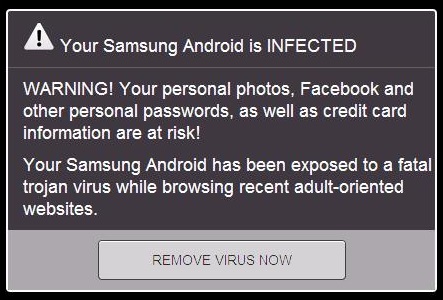
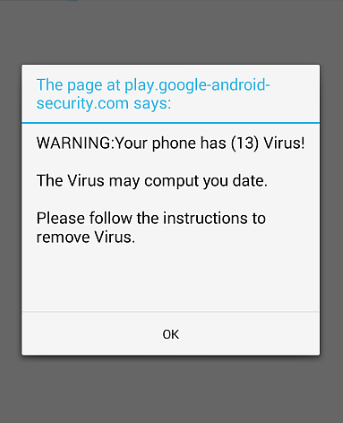
It looked like this when his phone was infected with dangerous viruses.
…and then it turns off.
You started to panic and tried to turn your phone on. But wait, your phone has been infected with a virus and won’t automatedly turn on, even though it is fully charged.
You are about to go to the phone dealer to get your phone fixed.
How public charging can pose serious risks of damage your devices?
When you are in public places, everyone uses the chargers, whether in Starbucks, fast food chains, the library, or at the retailer’s charging stations. There is no barrier between the public and your phone, so it is quickly transferred into the phone, especially the customer’s personal information. Hence, I believe that cybercriminals were there too to charge their phone at the “same place,” making them vulnerable to identity theft and stealing people’s information.
And the cybercriminals were excellent at hiding personal information in an HDMI [high-definition multimedia interface]. They waited until the next customer charged the phone, ready to share everything from the customer’s phone (Day and Schlesinger, 2016).
Once you start charging from the plug to your phone, it transfers the information from the plug to your phone. So the data you are charging isn’t private and risks installing and infecting your phone everything you took a plug and charge. Additionally, I am letting us know that the phones are equipped with the HDMI, which makes it’s easier to share all photos data (photos, videos, personal information, etc.) from the plug to the customer’s phone back to the cybercriminals, making it infect their phone easier than before.
That transmission is called “juice-jacking,” and it is now standard. And you don’t want to be victimized by “stealing and sharing information.”
So instead of using the public charging outlets, here are 2 ways:
- You can bring your own data blocker and use then whenever, wherever, and whether available, or
- You can bring your portable charger to charge your phone.
References:
Day, A., and Schlesinger, J., (2016). Travelers beware! That free charging station could hack your phone. CNBC Cybersecurity. Retrieved from https://www.cnbc.com/2016/09/21/travelers-beware-that-free-charging-station-could-hack-your-phone.html

 I-Powers Travel - Tips, Tricks, and Stories